Fall of the Berlin Wall (1989)
The opening of the Berlin Wall became one of the clearest symbols of the Cold War order breaking apart.
Cold War · computers · MTV · arcade · pop
The 1980s combined political upheaval, personal computing, video culture, bold fashion, blockbuster entertainment and an unmistakable appetite for color, speed and technology.
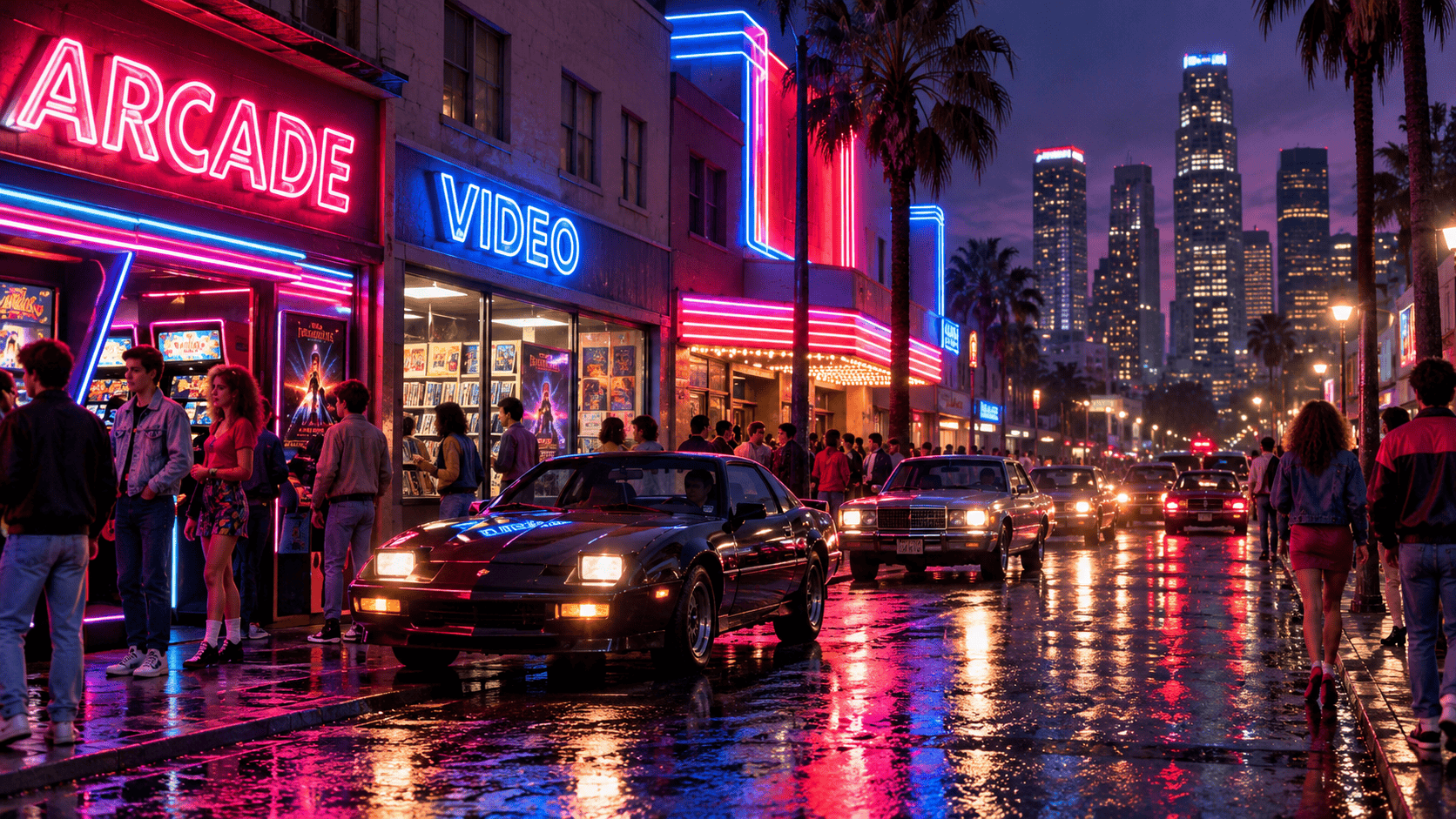
01 / Overview
The 1980s were a decade of strong contrasts. Economic growth and conspicuous consumption became highly visible in some places, while deindustrialization, inequality and the AIDS crisis created deep insecurity for others.
The Cold War remained central to world politics, but by the second half of the decade Mikhail Gorbachev’s glasnost and perestroika helped open a period of rapid change in the Soviet bloc.
The Berlin Wall opened in 1989, symbolizing a dramatic weakening of the postwar division of Europe.
Technology moved rapidly into everyday life. Personal computers spread through offices, schools and homes, compact discs changed music listening, home video expanded, and early cellular phones made mobile communication a commercial reality.
Music television reshaped how stars were marketed. Image, choreography, fashion and cinematic video became as important as radio airplay for many artists.
Popular culture was equally transformed by arcade games, home consoles, blockbuster cinema, hip-hop, synth-pop, hard rock and youth subcultures.
Fashion favored scale and visibility: oversized silhouettes, shoulder pads, bright plastics, acid-wash denim, athletic wear and designer labels all became part of the decade’s visual vocabulary.
02 / World
Political confrontation, humanitarian crises, activism and the unraveling of the Cold War order defined the decade’s global history.
The opening of the Berlin Wall became one of the clearest symbols of the Cold War order breaking apart.
The catastrophic nuclear accident in Soviet Ukraine exposed the dangers of reactor failure and secrecy.
The United Kingdom and Argentina fought a brief war over the Falkland Islands.
The long and devastating conflict reshaped politics and security across the Persian Gulf.
The pope survived being shot in St. Peter’s Square.
The space shuttle broke apart shortly after launch, killing all seven crew members.
Large pro-democracy demonstrations in Beijing ended in a violent government crackdown.
The globally televised benefit concerts in London and Philadelphia raised money for famine relief.
India’s prime minister was killed by two of her bodyguards.
Bombings killed hundreds of U.S. and French peacekeeping personnel in Lebanon.
A U.S.-led military intervention overthrew the island’s revolutionary government.
The bombing over Lockerbie, Scotland, killed 270 people.
Drought, conflict and food insecurity caused a major humanitarian disaster.
Nations agreed to phase out chemicals damaging the ozone layer.
The killing of the Philippine opposition leader intensified resistance to Ferdinand Marcos.
The epidemic reshaped public health, activism, medicine and social attitudes throughout the decade.
Former military leaders were prosecuted for abuses committed during the dictatorship.
Financial deregulation transformed the City of London and accelerated global finance.
The independent trade-union movement became a major force against communist rule.
American forces entered Panama and removed Manuel Noriega from power.
03 / Technology
Computers, optical media, telecommunications, biotechnology and home electronics turned once-specialized technologies into products people could see, touch and use.
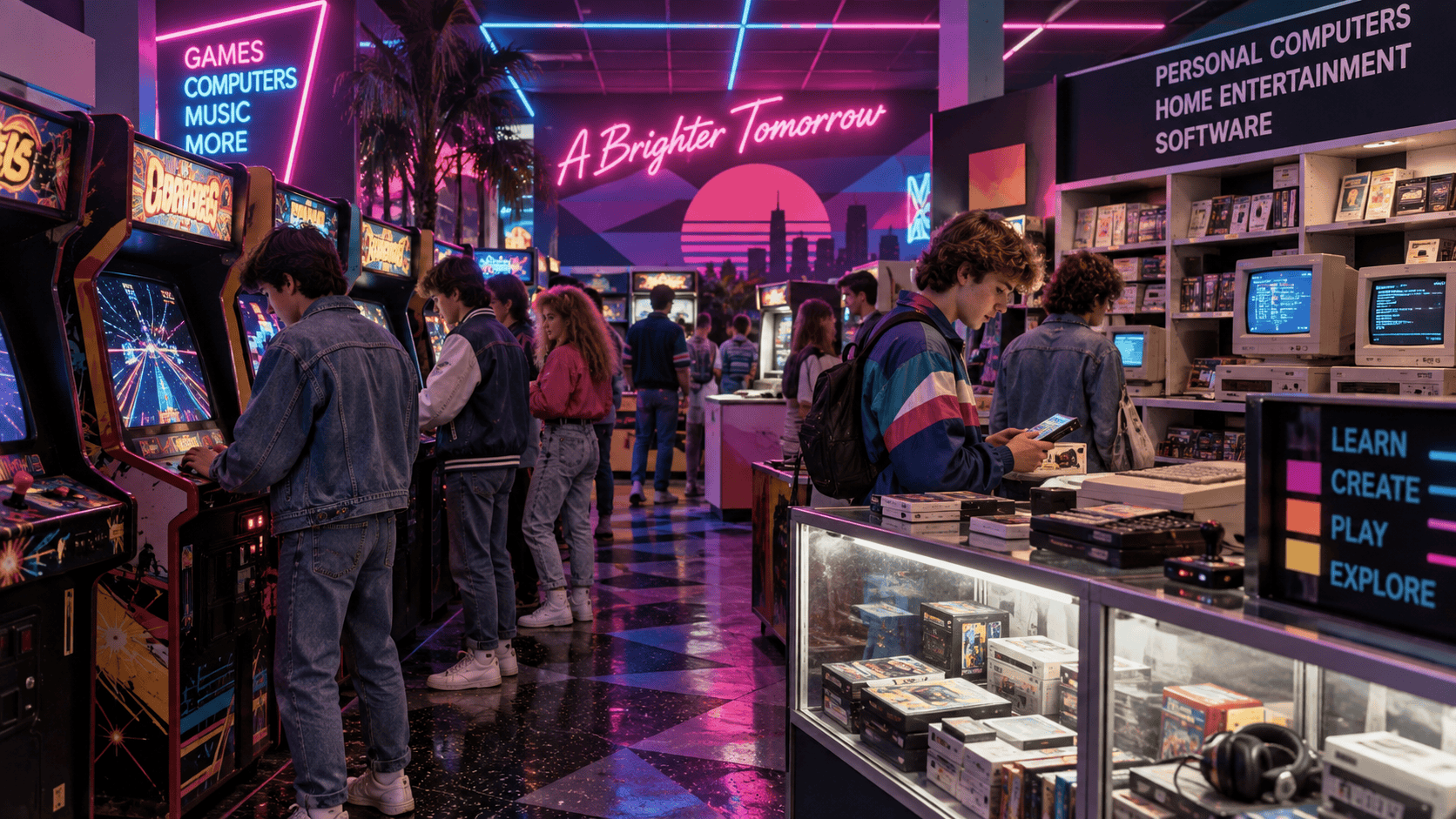
IBM’s PC and competing systems helped move computing into offices, schools and homes.
The graphical PC environment debuted in 1985.
Digital audio on optical discs began changing how music was sold and played.
Early cellular phones brought mobile calling to the public, though at high cost.
The adoption of common internet protocols created the technical foundation for modern networked communication.
Genetic profiling opened new possibilities in forensic science and identity testing.
Permanent artificial-heart implantation marked a dramatic step in biomedical engineering.
The home console helped revive and reshape the video-game market.
Single-use cameras made casual photography simpler and cheaper.
Portable computers became increasingly practical during the decade.
Video cameras with built-in recording made home moviemaking far easier.
The antidepressant was approved in the United States late in the decade.
DAT introduced high-quality digital recording on compact tape.
Experimental HDTV systems demonstrated the future of sharper television images.
Cash machines became increasingly common in banks and public locations.
Genetically engineered human insulin became a landmark biotechnology product.
The instrument allowed scientists to examine surfaces at the atomic scale.
Single-use lenses made vision correction more convenient.
Advanced handheld calculators brought plotting and programmable functions to students and professionals.
Bioengineered skin substitutes advanced treatment for serious burns.
04 / Culture
Music videos, gaming, television advertising, toys and fashion all competed for attention in a decade built around bright images and fast-changing trends.
The 1980s were also intensely tribal: preppy style, hip-hop, goth, metal, punk and mainstream pop each created distinctive sounds and visual codes.
Music television turned the music video into a central tool of pop culture and artist promotion.
The colorful puzzle became an international craze.
Workout videos and fitness classes became mainstream lifestyle culture.
Arcade gaming became a social and commercial phenomenon.
The comic-book characters grew into a major late-decade franchise.
The animated family first appeared on television in shorts before becoming a full series at the decade’s end.
The dolls triggered one of the decade’s best-known toy-buying frenzies.
Street dance moved from local scenes into movies, television and global youth culture.
The distinctive short-front, long-back haircut became strongly associated with the era.
Synthesizers, punk influence and stylish visuals reshaped pop and rock.
Young urban professionals became shorthand for ambition, consumption and status.
Tabletop role-playing grew into a major hobby and subculture.
Homemade cassette compilations became personal expressions of taste and identity.
Short-form visual storytelling became inseparable from major pop releases.
Nintendo’s handheld console arrived in 1989 and immediately expanded portable gaming.
Dark post-punk style developed into a distinct music and fashion scene.
Shape-changing robot toys became a major children’s franchise.
Female pop stars used playful, assertive songs to shape mainstream conversations about independence.
Television commercials regularly pushed slogans into everyday speech.
Computer graphics, scan lines and synthetic presenters fed the decade’s fascination with electronic futures.
05 / America
Wall Street boomed while hip-hop, art, fashion and nightlife fueled a major cultural renaissance.
Film, television and music expanded while the 1984 Olympics gave the city a global showcase.
The city diversified its economy and remained a powerful center of architecture, music and politics.
Nearby Silicon Valley accelerated the personal-computer and semiconductor revolutions.
Migration, nightlife, television imagery and the drug trade shaped the city’s vivid national image.
The capital stood at the center of Reagan-era politics and Cold War strategy.
A new alternative music scene began forming while the city rebuilt after the Boeing downturn.
The oil boom and bust dramatically affected the city’s economy.
Population growth, corporate investment and the 1988 Democratic National Convention increased its national profile.
High-technology industries contributed to the region’s economic revival.
Automakers faced foreign competition, restructuring and persistent urban challenges.
Tourism and preservation efforts sustained the historic core despite economic pressures.
The city kept expanding as an entertainment and gambling destination.
Corporate growth, music and arts scenes strengthened the Twin Cities’ cultural profile.
Redevelopment projects competed with deep social tensions and the MOVE bombing controversy.
Military investment and biotechnology supported continued expansion.
Rapid Sunbelt migration drove suburban growth and sprawl.
Oil wealth, corporate growth and television made the city a national symbol of 1980s Texas.
The energy bust pushed the region toward economic diversification.
Environmental politics, urban planning and alternative culture became more visible.
06 / Fashion
1980s fashion rarely tried to disappear. Broad shoulders, neon sportswear, acid-wash denim, large hair, logos and synthetic fabrics turned clothing into a public statement.
Exaggerated shoulders made power dressing instantly recognizable.
Dancewear migrated into everyday fashion.
Bleached and mottled denim became a staple of casual style.
Fluorescent pink, green, blue and yellow dominated activewear and accessories.
Loose nylon trousers became linked with dance and street culture.
Broad shoulders and sharp tailoring projected professional authority.
Logo-driven outerwear became part of the decade’s brand-conscious style.
Large metal-frame sunglasses returned to mainstream popularity.
Pop stars pushed lingerie-inspired and rebellious materials into mass fashion.
Bright plastic watches treated timepieces as affordable collectibles.
The glossy curled hairstyle became a defining look in Black popular culture.
Polo shirts, loafers and collegiate influences entered the mainstream.
Stretch fabric became essential to exercise wear and body-conscious fashion.
The accessory crossed from punk styling into pop fashion.
Colorful plastic footwear became a summer favorite.
Hands-free belt bags combined practicality with casual style.
Leather, studs, ripped clothing and mohawks remained symbols of rebellion.
Thick socks worn scrunched at the ankle became a youth-fashion staple.
Large sweaters, jackets and shirts exaggerated scale.
Large curved clips helped create high-volume hairstyles.
07 / Movies
Hollywood developed a highly recognizable mix of effects-driven spectacle, comedy, horror, teen stories and franchise filmmaking.
Steven Spielberg’s alien friendship story became one of the decade’s defining blockbusters.
The time-travel comedy became an enduring popular-culture phenomenon.
John Hughes turned teen stereotypes into a generational drama.
The science-fiction noir established an influential vision of a dystopian urban future.
Indiana Jones introduced a new model of retro adventure filmmaking.
James Cameron combined time travel, action and science-fiction horror.
Supernatural comedy became a massive commercial hit.
The film reshaped expectations for the modern action hero.
Stanley Kubrick created one of cinema’s most recognizable psychological horror films.
The sequel expanded science-fiction horror into full-scale action.
Tim Burton’s dark visual approach helped relaunch superhero cinema.
The romantic comedy became a modern genre benchmark.
Fast jets, pop music and glossy imagery turned the film into a cultural touchstone.
The teen comedy celebrated rule-breaking and friendship.
Fantasy, romance and comedy blended into a lasting cult favorite.
Oliver Stone’s Vietnam War drama won the Academy Award for Best Picture.
Dance, romance and soundtrack success made the film a phenomenon.
Live action and animation were combined with remarkable technical sophistication.
The film brought Alice Walker’s novel to a mass cinema audience.
Spike Lee’s 1989 film examined race, heat, neighborhood life and conflict in Brooklyn.
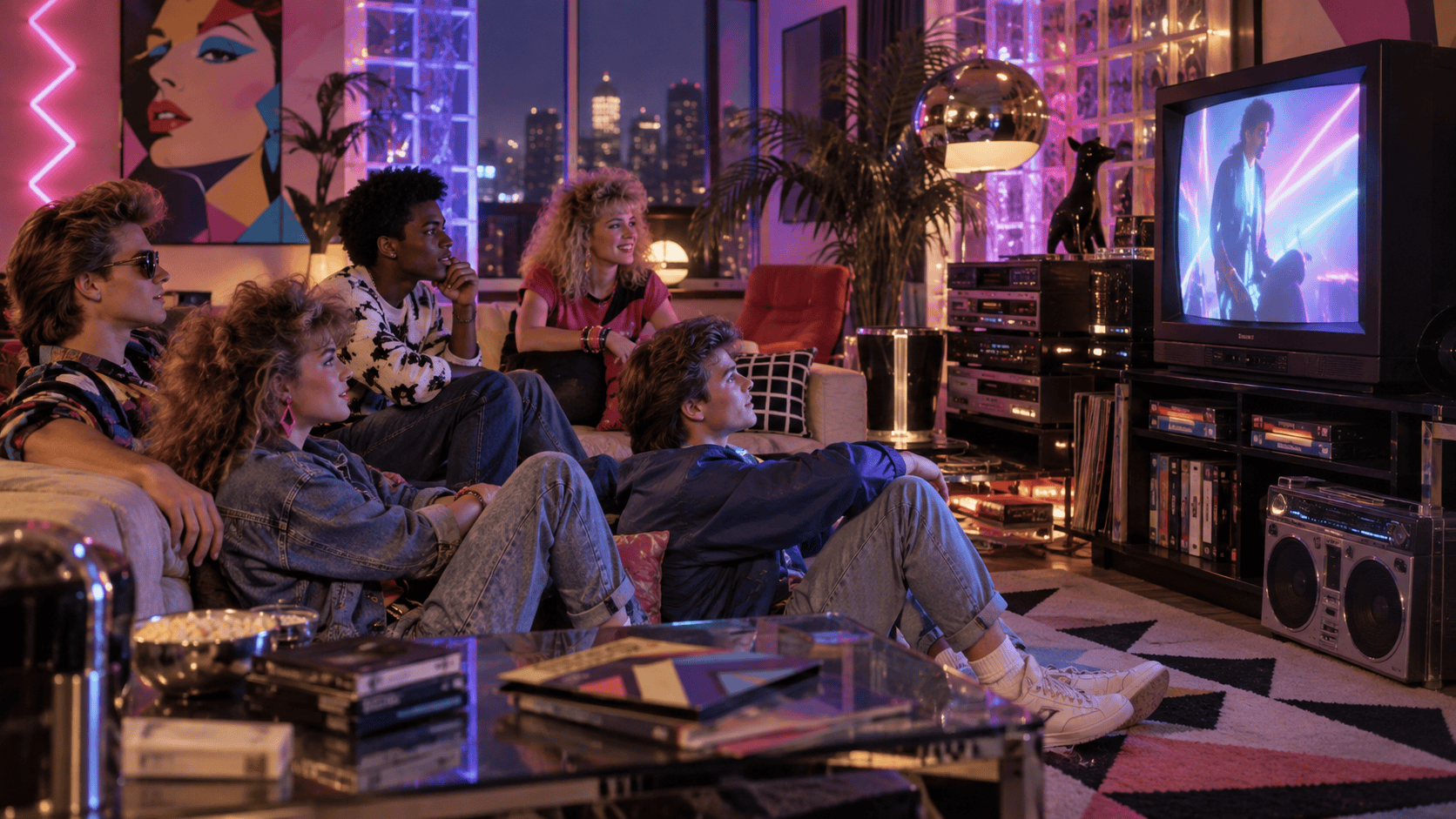
08 / Music
Pop stars became multimedia figures while hip-hop broke into the mainstream, synths transformed studio sound and alternative scenes expanded outside traditional rock radio.
The album and its videos transformed the scale of global pop stardom.
The album cemented Madonna’s provocative pop persona.
Music, film and performance combined into a defining pop-cultural event.
The collaboration helped bring hip-hop to a much wider rock audience.
The debut album gave hard rock a raw new commercial peak.
The band’s final studio album became its biggest worldwide success.
The Irish band reached global superstar status.
The album helped make rap a mainstream commercial force.
The debut showcased a playful and distinctive pop identity.
The album’s visual style and music videos defined New Romantic pop.
The hugely successful album paired arena rock with complicated stories of American life.
The debut album launched one of pop and R&B’s biggest voices.
The album became a model for glossy 1980s arena rock.
The punk pioneers reached their greatest commercial success.
Polished studio sound helped define radio-friendly hard rock.
Electronic dance music and post-punk converged in a landmark single.
Art rock, funk and African-influenced rhythms collided in an innovative album.
The 1987 album expanded the synth-pop band’s international audience.
The album became one of hip-hop’s most influential political statements.
Released in 1989, the album brought dark, atmospheric alternative rock to a larger audience.
09 / Cars
Automotive design reflected the decade’s obsession with performance technology and futuristic surfaces.
Its stainless-steel body and movie fame made it an enduring 1980s icon.
The supercar celebrated Ferrari’s fortieth anniversary with extreme performance.
Advanced all-wheel drive and electronics made it one of the decade’s technical landmarks.
The high-performance compact sedan became a motorsport and enthusiast classic.
Permanent all-wheel drive transformed rallying and performance-car expectations.
V8 power helped restore interest in American performance cars.
The practical hot hatch refined a successful formula.
Wedge styling and scissor doors epitomized supercar excess.
The affordable mid-engine sports car brought exotic layout ideas to a wider market.
The performance model became a recognizable symbol of American car culture.
The compact sport sedan combined racing development with everyday practicality.
Turbocharged power gave the understated black coupe a formidable reputation.
Rotary power and pop-up headlights made the sports car distinctively 1980s.
A tuned economy hatch showed that small cars could deliver serious performance.
Honda’s new luxury brand entered the U.S. market with a polished flagship sedan.
The compact unibody SUV became hugely influential.
Distinctive Scandinavian design and turbo power earned a loyal following.
The mid-engine American sports car used innovative plastic body panels.
Sharp styling and hydropneumatic suspension made the French hatchback unmistakable.
Digital instrumentation and angular styling captured the era’s high-tech image.
Legacy
The 1980s helped create the world that followed. Personal computers, digital networks, game consoles, mobile communication and video culture all moved closer to the center of daily life.
The decade also changed celebrity itself. Music videos, global branding and visual identity tied image and media together more tightly than before.
Its political legacy was equally significant: the Cold War entered its final phase, the AIDS crisis transformed public-health activism, and globalization accelerated through finance, technology and media.
Modern nostalgia for the 1980s is not only about neon and synths. It reflects a decade in which the analog world visibly began turning digital.
11 / FAQ
The decade is remembered for the Cold War’s final years, the AIDS crisis, personal computers, MTV, arcade and home gaming, blockbuster films, hip-hop, synth-pop, power dressing and bold consumer culture.
Bright plastics, neon sportswear, Memphis-style geometry, music videos and new electronic media all favored high-contrast color and graphic impact.
Personal computers, compact discs, mobile phones, camcorders, game consoles, networking standards and ATMs all became more important during the decade.
Pop, hip-hop, new wave, synth-pop, hard rock, metal, post-punk and alternative music all played major roles.
MTV and other video outlets made image, fashion, choreography and short-form filmmaking central to music promotion.
The decade closed with the Berlin Wall opening, communist regimes weakening across Eastern Europe and personal computing becoming a foundation for the coming internet age.